
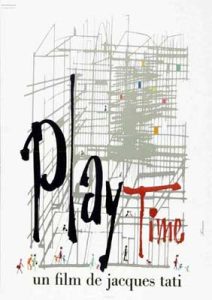
After the quirkiness of Mon Oncle, Jacques Tati’s Monsieur Hulot returns, this time to attend a meeting at a hyper-modern Paris office. This time, Tati extrapolates the idea of filming the only tangentially connected paths of his characters to absurd proportions: an American tour group bypass most of the Parisian landmarks in search of things to buy, an exclusive new nightclub has its opening night, and the patrons of a late night drugstore.
While these are all settings and events that are seen during the film, they aren’t the story, and, perhaps, the film’s purpose wasn’t to tell a story, but to simply choreograph and observe: The city and its people move, ebb and flow, from straight lines and clean, reflective surfaces and rigid order by day, to warm glows and frantic action by night, only for the two to meet at dawn.
An entire city – Tativille – was built to film PlayTime, and the production left Jacques Tati bankrupt. Audiences of the day didn’t applaud Tati’s sacrifice – they didn’t get the film they were expecting. Almost plotless, with the beloved Monsieur Hulot drifting in and out of plots as often as bit characters, the film demands that it’s viewers abandon what they know about watching movies, and simply experience.
 admin
admin